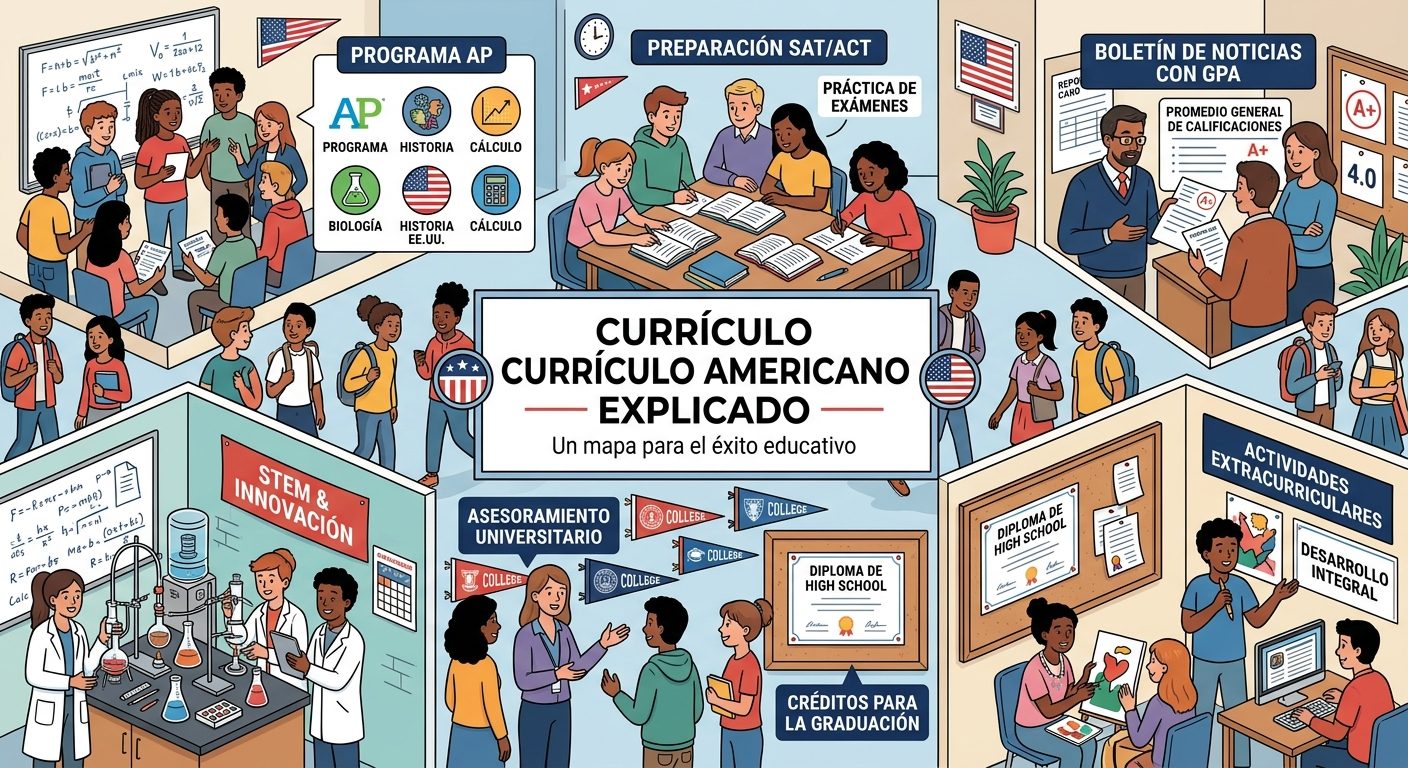
The American curriculum explained
American-curriculum schools in Spain organize schooling into continuously numbered "grades," typically from Kindergarten (ages 5-6) through 12th Grade (ages 17-18), grouped into Elementary School, Middle School and High School — a different naming system from both the Spanish and British models, even though the age ranges overlap quite a bit.
One of the most distinctive features is the GPA (Grade Point Average), a cumulative average tracked throughout High School that summarizes a student's overall performance, and which universities use as a central reference in admissions, alongside standardized tests and other factors.
AP (Advanced Placement) courses are also common: college-level subjects a High School student can take to go deeper or get ahead, which in many countries count toward advanced university credit. Not every school offers the same range of AP courses, so if this matters to you, ask specifically what a given school offers.
One practical difference worth knowing: the American system puts a lot of weight on the whole record over time (grades across several years, extracurricular activities, recommendation letters) rather than on a single final exam, unlike systems where one specific test carries more weight. If the goal is a university outside Spain, it's worth understanding early on how a Spain-based school's transcript fits into that admissions process.