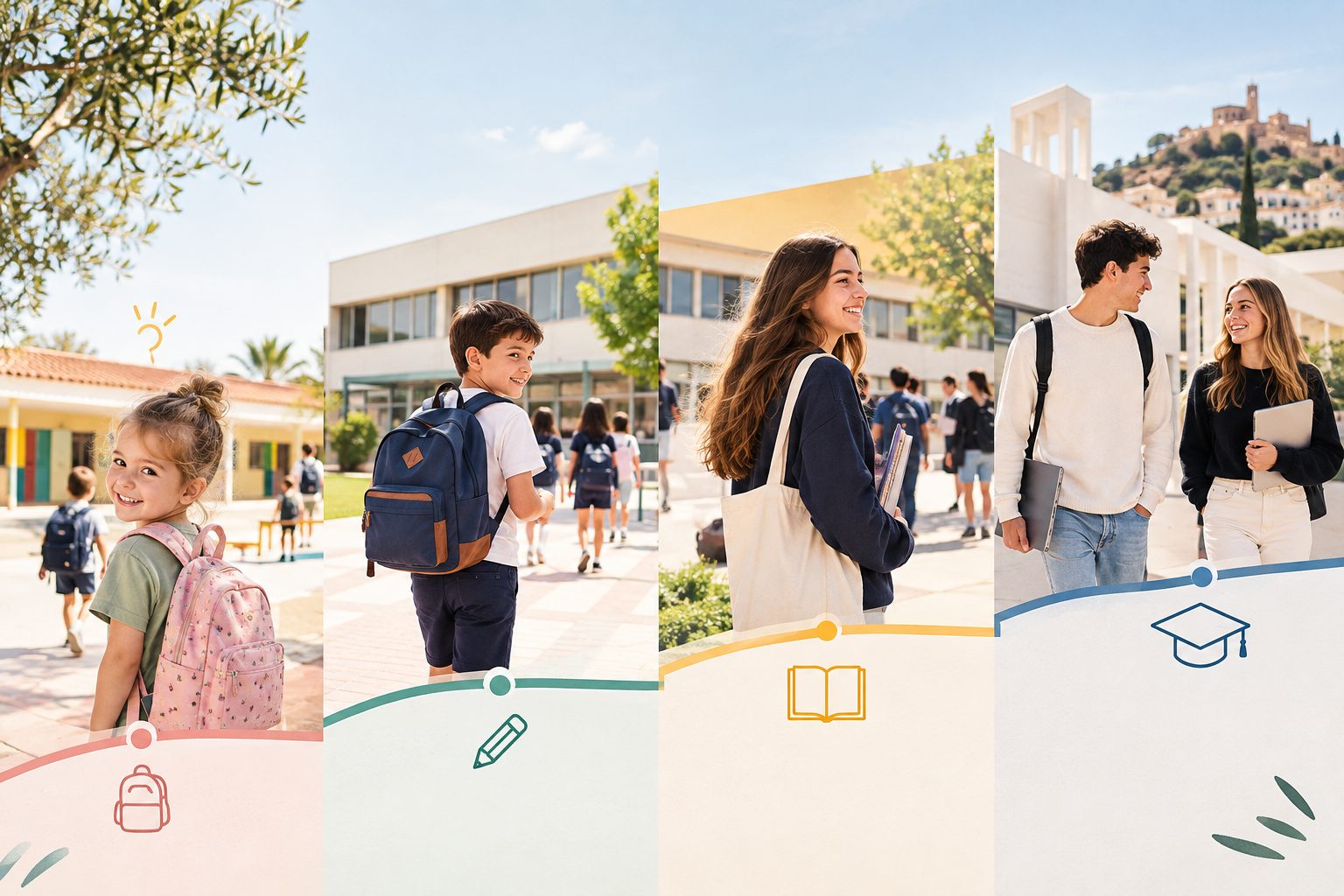
The Spanish school system explained
Spain's education system is organized into stages: Educación Infantil (ages 0-6, with the second half functioning as near-universal in practice even though the first cycle isn't formally compulsory), Educación Primaria (ages 6-12), Educación Secundaria Obligatoria or ESO (ages 12-16), and then Bachillerato (academic track) or Formación Profesional (vocational track) from 16-18.
As for school types, you'll see three categories: colegios públicos (fully public, funded and run by the administration), colegios concertados (privately run but partly publicly funded, subject to admission rules similar to public schools), and colegios privados (fully privately funded).
Bilingual or plurilingual schools are also common, where part of the curriculum is taught in English or another language. How bilingual a school actually is varies a lot, so it's worth asking specifically how many weekly hours and which subjects are taught in each language.
Finally, each autonomous community (region) has its own authority over education, so some details — school calendar, admission criteria, co-official languages — can vary depending on where you live.