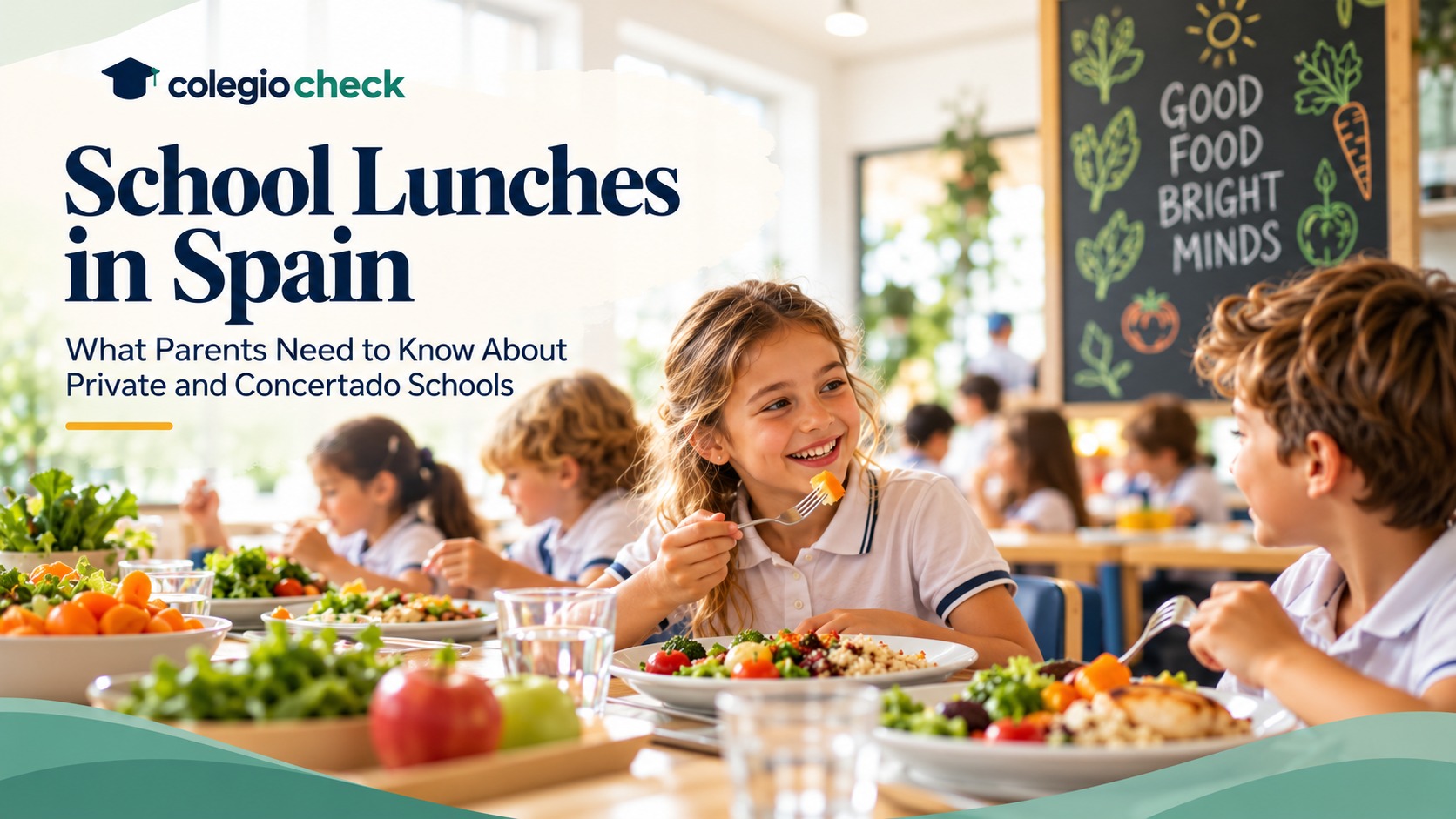
School Lunches in Spain: What Parents Need to Know About Private and Concertado Schools
What do children eat at school in Spain? How much does school lunch cost? And are private schools different from concertado schools when it comes to food?
For families choosing a school in Spain, lunch is an important part of everyday life. It affects not only what children eat, but also the school timetable, the family budget and the practicalities of working parents.
Whether you are moving to Spain or comparing schools for your child, this guide explains how school lunches work, what to look for on a menu and which questions to ask before enrolling.
How Does School Lunch Work in Spain?
School lunch is known as the comedor escolar. It is a supervised lunchtime service offered by many schools, allowing children to stay on the school premises rather than going home to eat.
In many Spanish schools, lunch is a substantial cooked meal rather than a quick sandwich. A typical menu might include:
- First course: lentils, chickpeas, rice, pasta or vegetables.
- Second course: fish, chicken, eggs or another protein source, often served with vegetables or potatoes.
- Dessert: usually fresh fruit, although yoghurt or another dairy product may also be offered.
- Drinks: water is the standard choice.
Menus vary by school, age group and catering arrangements. Some schools prepare meals in their own kitchens, while others work with specialist catering companies.
The lunch break may also include supervised play or outdoor activities. At some schools, younger children have rest time before afternoon lessons begin.
For families who are used to shorter lunch breaks, the Spanish system can take some getting used to. It is worth checking the entire school timetable before making a decision.
Do Private and Concertado Schools Offer Different Lunches?
Both private and concertado schools may offer a school canteen, but there is no single model followed by every school.
A concertado school is privately managed but receives public funding under an agreement with the government. A private school operates independently of this funding arrangement.
Neither category automatically guarantees better food, a wider choice of dishes or lower prices.
Concertado schools
Many concertado schools offer a comedor service for families who need their children to stay at school during lunchtime.
Meals may be prepared on the premises or supplied by an external catering company. Some schools offer fixed monthly bookings, while others may allow occasional use of the service.
The price, menu and supervision arrangements depend on the individual school.
Private schools
Private schools also vary considerably in how they organise lunch.
Some have their own kitchens and dining facilities, while others use external caterers. International schools may have different timetables, dining arrangements or additional services for pupils of different ages.
A higher school fee does not necessarily mean that lunch is included or that the food is freshly prepared on site.
The best way to compare schools is to look at their actual menus, costs and catering arrangements rather than assuming one type of school offers a better service.
Compare public, concertado and private schools in SpainWhat Is Changing About School Food Standards in Spain?
School meals are receiving increasing attention as part of Spain's wider efforts to promote healthier eating habits among children.
Royal Decree 315/2025, which entered into force on 16 April 2026, establishes national requirements for healthier and more sustainable food provision in eligible public, concertado and private schools. Some provisions have a later implementation date. The rules cover school meals, food and drinks available on school premises, and nutritional standards.
The framework promotes:
- Fresh and seasonal ingredients.
- A greater emphasis on vegetables, fruit, legumes and whole grains.
- Balanced menus with appropriate sources of protein.
- Healthier cooking methods and less reliance on fried foods.
- Access to drinking water.
- Menu information for families, including details about dishes and allergens.
The decree also establishes requirements for special menus for pupils who need them for medical, ethical or religious reasons, subject to the conditions set out in the legislation.
For parents, this means that school food is not simply a matter of personal preference or the school's marketing claims. There are national standards that schools covered by the rules must follow.
Read Royal Decree 315/2025 in the Spanish Official Gazette (BOE)What Should Parents Look for on a School Menu?
A menu can tell you quite a lot about a school's approach to food.
Rather than focusing on one particular meal, look at the menu over several weeks. Variety and balance throughout the month are more informative than whether your child happens to like a particular dish.
Here are some useful things to look for.
Variety throughout the week
Do the menus include a range of vegetables, legumes, grains, fish, eggs and other protein sources? Or do similar dishes appear repeatedly?
Fresh fruit and vegetables
Check how often fresh fruit and vegetables are served and whether the menu reflects seasonal produce.
Cooking methods
Ask whether meals are cooked on site and which preparation methods are used. Baking, steaming and grilling can be useful alternatives to frequent frying.
Portion sizes
Portions should be appropriate for the age of the children. Ask how the school accommodates younger pupils and children with different appetites.
Transparency
A school that provides a clear monthly menu, ingredient information and allergen details makes it easier for parents to understand what their children are eating.
How Much Does School Lunch Cost?
The cost of a comedor escolar varies between schools and regions. There is no single price that applies to all private and concertado schools in Spain.
Some schools charge a daily rate, while others offer a monthly fee based on regular attendance. Occasional bookings may be available, but this is not guaranteed.
When comparing prices, check what is included.
- Is lunch charged separately from tuition?
- Does the price include supervision and lunchtime activities?
- Are there different rates for occasional and regular attendance?
- What happens if your child is absent?
- Are special menus available at the same price?
For a family with two or more children, the cumulative cost can be significant over an academic year. It is worth including lunch in your overall school budget rather than treating it as a minor additional expense.
Food Allergies, Intolerances and Special Diets
For some families, the school's approach to dietary requirements is one of the most important factors in choosing a school.
If your child has a food allergy, coeliac disease or another medical dietary requirement, contact the school before enrolment.
Ask how the school manages allergens, whether it can provide an appropriate special menu and how kitchen staff and lunchtime supervisors communicate about dietary needs.
It is also important to understand how the school prevents cross-contamination. A menu that lists allergens is helpful, but it does not by itself explain the safety procedures used in the kitchen and dining room.
Families requiring vegetarian, vegan or meals adapted to religious or cultural needs should also ask what arrangements are available and confirm them directly with the school.
What Happens During the Lunch Break?
The comedor is about more than food. It is also a part of the school day when children socialise, develop independence and take a break from classroom learning.
Depending on the school, pupils may eat in age-based groups, have supervised outdoor play or take part in quieter activities.
Younger children may need more help with eating, while older pupils may have greater independence.
When visiting a school, ask who supervises lunchtime, how many adults are present, whether children have access to outdoor spaces and what happens if a child does not finish their meal.
These details can be particularly important for children starting school for the first time or moving to a new country.
Final Thoughts: School Lunch Is Part of Choosing the Right School
When choosing a school in Spain, it is easy to concentrate on academic results, languages, facilities and extracurricular activities. But the lunch service is also worth investigating.
For some families, the deciding factor may be the cost or timetable. For others, it may be food quality, dietary flexibility or the way children are supervised during the break.
Private and concertado schools can offer very different experiences, even within the same area. Looking at menus, asking questions and understanding the full daily routine can help you make a more informed decision.
Looking for a school in Spain? Explore school profiles and parent reviews on ColegioCheck to learn more about schools and compare the experiences families share.
Browse schools on ColegioCheckFrequently asked questions
Can we see a sample monthly menu?
This gives you a clearer picture of variety, portion planning and the school's approach to balanced meals.
Is the food prepared on site or supplied by a caterer?
Neither arrangement is automatically better. Ask how the school manages food quality, preparation and safety.
What is the total cost of the comedor?
Confirm whether the fee is daily or monthly and whether supervision or activities are included.
How does the school handle allergies and special diets?
Ask about special menus, allergen communication and practical measures to prevent cross-contamination.
What happens before and after lunch?
Find out about the timetable, supervision, outdoor play and whether afternoon lessons or after-school care are available.